
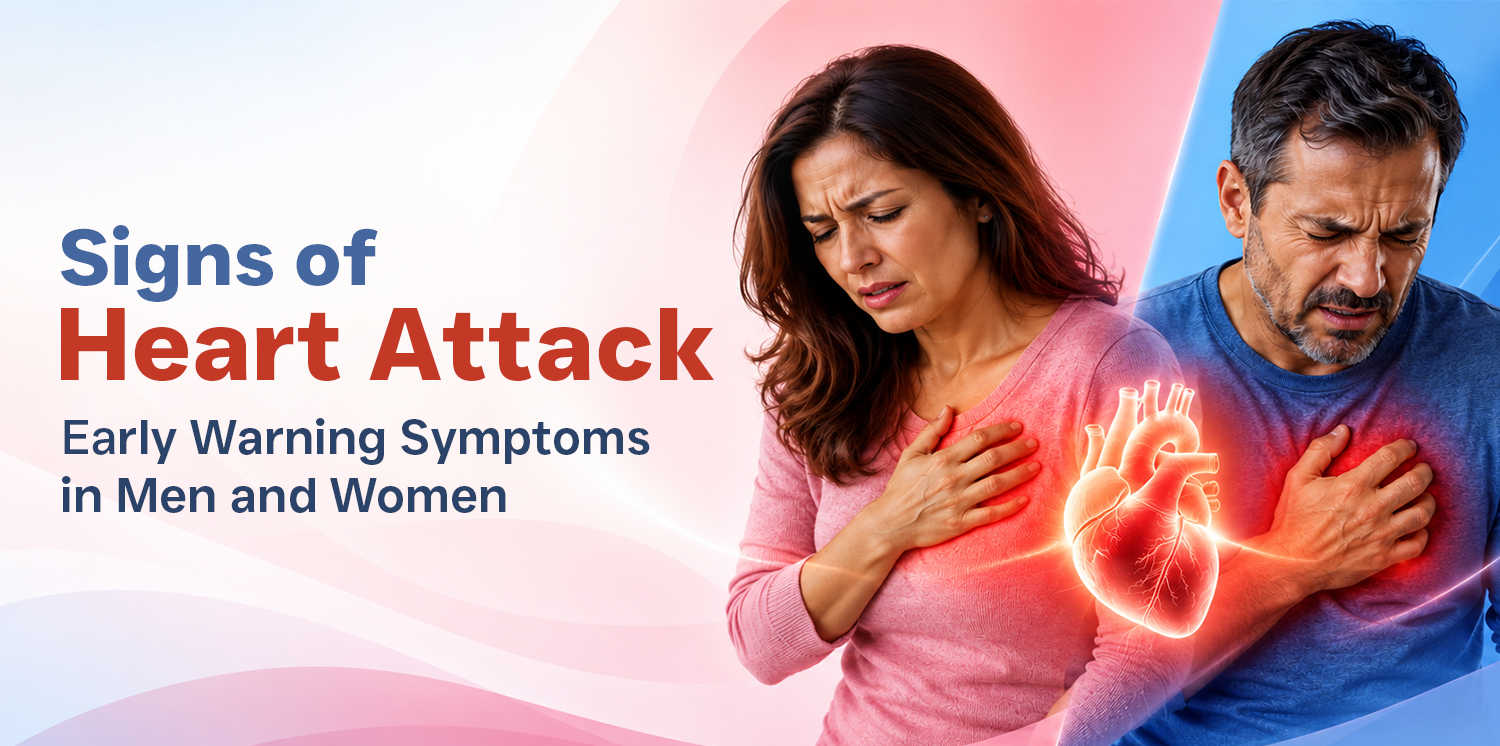
The primary symptoms of a heart attack include pain or pressure in the chest, pain spreading to the arm, jaw or back, difficulty breathing, cold sweats, nausea and dizziness. The symptoms and signs of a heart attack may vary between men and women, so it is important to recognise the different warning signs.
A heart attack may begin slowly or occur suddenly. Recognising the early warning signs and acting quickly can help save your life or that of someone you love. This guide explains the symptoms of a heart attack in men and women, its causes, emergency warning signs and what to do if you suspect a heart attack.
Quick Measure: Call 112 or 108 immediately if you experience chest pain or pressure, particularly when it persists for more than a few minutes or occurs with shortness of breath, cold sweats, nausea or pain in the arm, jaw or back. Women may also experience unusual fatigue, nausea and back or jaw pain. Do not wait for the symptoms to disappear, and do not drive yourself to the hospital.
What Is a Heart Attack?
The heart is a muscle that depends on a continuous supply of oxygen-rich blood. A heart attack, medically known as a myocardial infarction, occurs when blood flow to part of the heart muscle becomes blocked. Without enough oxygen, the affected heart muscle begins to suffer damage.
The longer the blockage remains untreated, the greater the potential damage. This is why seeking emergency medical care quickly is essential.
Heart attacks commonly occur because of a condition called coronary artery disease. Over time, cholesterol, fat and other substances build up inside the arteries, forming plaques. If a plaque ruptures, a blood clot can develop and block blood flow to the heart.
Several factors increase the risk of a heart attack:
- High blood pressure and high cholesterol.
- Diabetes.
- Smoking and tobacco use.
- Obesity and physical inactivity.
- A family history of heart disease.
- Long-term stress and poor sleep.
- Increasing age.
Common Signs and Symptoms of a Heart Attack
Heart attack symptoms can appear suddenly or develop gradually. Some people experience several symptoms together, while others notice only one or two.
Chest Pain, Pressure or Tightness
Chest discomfort is one of the most common signs of a heart attack. People may describe it as a heavy weight on the chest, squeezing, tightness, fullness or a burning ache.
The discomfort often occurs in the centre or left side of the chest. It may last more than a few minutes or disappear and return.
Do not ignore unexplained chest discomfort. Seek emergency medical assistance rather than waiting for an appointment at a chest pain treatment hospital. Doctors can assess the symptoms using an electrocardiogram (ECG), blood tests and other investigations.
Pain Spreading to the Arm, Jaw, Neck, Back or Stomach
Heart attack pain can spread beyond the chest. You may experience discomfort or heaviness in one or both arms, the shoulder, jaw, neck, upper back or upper abdomen.
Some people mistake upper abdominal discomfort for indigestion or acidity. When this discomfort occurs alongside sweating, breathlessness or chest pressure, it should be treated as a potential emergency.
Shortness of Breath
You may feel as though you cannot get enough air, even while resting. Breathlessness can occur with chest pain or may appear before chest discomfort begins.
Sudden, unexplained difficulty breathing requires urgent medical attention, particularly when accompanied by other heart attack symptoms.
Cold Sweat
Sudden, unexplained sweating can be a warning sign of a heart attack. Your skin may feel cold and clammy even when you have not exercised or been exposed to heat.
Nausea or Vomiting
A heart attack can cause nausea, vomiting or discomfort resembling indigestion. Some people dismiss these symptoms as acidity or food poisoning, which can delay emergency treatment.
Dizziness or Lightheadedness
You may feel dizzy, weak, unsteady or as though you are about to faint. If dizziness occurs with chest discomfort, sweating or shortness of breath, seek emergency medical help.
Unusual Tiredness
Unexplained fatigue can sometimes occur before a heart attack, particularly in women. Routine activities may suddenly feel exhausting, and the tiredness may persist despite adequate rest.
Fatigue alone does not confirm a heart attack, but sudden or unusual tiredness accompanied by other warning signs should not be ignored.
Early Signs of a Heart Attack
Some people experience warning symptoms hours, days or occasionally weeks before a heart attack. Others develop symptoms without any obvious warning.
Possible early signs include:
- Chest discomfort during walking, climbing stairs or physical activity.
- Breathlessness during activities that previously felt easy.
- Unusual fatigue that does not improve with rest.
- Mild discomfort in the jaw, back, shoulder or arm.
- Indigestion-like discomfort in the upper abdomen.
- Episodes of dizziness or a racing heartbeat.
These symptoms can have several causes, but recurring or unexplained symptoms warrant prompt medical assessment.
Consult the best cardiologist in Navi Mumbai to assess your heart health and determine whether further testing is needed. If you experience symptoms suggesting an active heart attack, call 112 or 108 immediately instead of arranging a routine consultation.
Warning Signs of a Heart Attack: When to Get Emergency Help
Certain symptoms require immediate medical attention. Call 112 or 108 if you experience:
- Chest pain or pressure that lasts more than a few minutes or repeatedly returns.
- Pain spreading to the arm, jaw, neck or back.
- Sudden or severe shortness of breath.
- Cold sweats accompanied by nausea or vomiting.
- Fainting or feeling close to fainting.
- Unexplained chest discomfort accompanied by sudden weakness or dizziness.
How to Know If You Are Having a Heart Attack
You cannot reliably confirm or rule out a heart attack based on symptoms alone. Medical tests are needed to determine the cause.
Consider whether you are experiencing chest discomfort, pain spreading to other areas, breathlessness, sweating, nausea or dizziness. These symptoms may occur together or separately.
Do not wait until you experience multiple symptoms before seeking help. Even one new, unexplained symptom can require emergency assessment, particularly if it is severe or persistent.
If you suspect a heart attack, call 112 or 108 immediately. Do not delay treatment while trying to determine whether the symptoms are caused by acidity, anxiety or another condition.
Signs of a Heart Attack in Men
The signs of a heart attack in men commonly include chest discomfort, although symptoms vary between individuals.
Heart attack symptoms in men may include:
- Chest pressure, squeezing or a heavy feeling.
- Pain spreading to the arm, shoulder, neck or jaw.
- Cold sweats and breathlessness.
- Nausea or dizziness.
- Sudden discomfort during physical activity or while resting.
Some men dismiss these symptoms or assume they are too young to experience a heart attack. However, heart attacks can occur in younger adults, particularly when risk factors such as smoking, diabetes, high blood pressure or a family history of heart disease are present.
Recognising symptoms early and seeking prompt treatment can help limit heart muscle damage.
Signs of Heart Attack in Women
The signs of a heart attack in women can vary. Chest discomfort remains a common symptom, but some women experience milder pressure, discomfort in other parts of the body or symptoms without obvious chest pain.
Possible heart attack symptoms in women include:
- Unusual or overwhelming fatigue.
- Shortness of breath, with or without chest discomfort.
- Nausea, vomiting or indigestion-like discomfort.
- Pain in the back, jaw, neck or upper abdomen.
- Dizziness, cold sweats or sudden weakness.
- Chest pressure or discomfort.
These symptoms can resemble digestive problems or stress, making them easier to overlook. Women should seek emergency care if they develop symptoms that could indicate a heart attack.
A cardiologist may recommend investigations such as CT coronary angiography in Navi Mumbai when appropriate to assess the coronary arteries. However, CT coronary angiography is not a substitute for emergency assessment during suspected acute heart attack symptoms.
Comparison Between Signs of Heart Attack in Men and Women
Both men and women can experience chest pain, breathlessness, nausea and other heart attack symptoms. The following table highlights common patterns, not strict differences between the sexes.
| Sign | Men | Women |
|---|---|---|
| Chest discomfort | Pressure, squeezing or heaviness | Pressure, squeezing or discomfort; sometimes less obvious |
| Pain spreading | Arm, shoulder, neck or jaw | Arm, jaw, neck, back or upper abdomen |
| Shortness of breath | May occur with chest discomfort or alone | May occur with chest discomfort or alone |
| Cold sweat | Possible | Possible |
| Nausea or vomiting | Possible | Possible |
| Unusual tiredness | Possible | May be prominent |
| How it starts | Sudden or gradual | Sudden or gradual, including at rest |
These are general patterns, and symptoms overlap considerably. Neither men nor women should assume that a heart attack is unlikely because they do not have the symptoms commonly associated with their sex.
What to Do If You Notice These Signs
If you suspect a heart attack, take the following steps immediately:
- Call 112 or 108. Explain the symptoms and follow the emergency operator’s instructions.
- Stop physical activity. Sit down in a comfortable position and avoid exertion while waiting for help.
- Follow medical advice about aspirin. An emergency operator or healthcare professional can advise whether aspirin is appropriate. Do not take it if you have an allergy or a medical reason to avoid it unless a qualified professional directs otherwise.
- Ask someone to stay with you. Unlock the door if possible and keep your phone accessible.
- Do not drive yourself. Your condition could worsen suddenly, and emergency personnel can begin care on the way.
- Go to an emergency department. If an ambulance is unavailable, follow emergency service guidance about the safest way to reach the nearest appropriate hospital.
If someone collapses, does not respond and is not breathing normally, call emergency services, begin CPR by pushing hard and fast in the centre of the chest, and use an automated external defibrillator (AED) if one is available. Follow the emergency operator’s instructions.
For urgent assessment, seek care at the emergency hospital in Navi Mumbai closest to you. Do not delay emergency care to research hospital options.
Conclusion
Heart attack symptoms can be obvious or subtle, and they vary between individuals. Chest discomfort, breathlessness, cold sweats, nausea and pain spreading to the arm, jaw or back deserve prompt attention.
Recognising early warning signs and acting quickly can save lives. People with diabetes, high blood pressure, high cholesterol, smoking habits or a family history of heart disease should also discuss their cardiovascular risk with a doctor.
If you suspect a heart attack, call 112 or 108 immediately rather than waiting for symptoms to settle.
FAQs
1. What are the first signs of a heart attack?
Early symptoms may include chest discomfort, shortness of breath, unusual fatigue, nausea or discomfort in the arm, jaw or back. Symptoms can begin suddenly or develop gradually, and some people have no obvious warning.
2. Can you have a heart attack without chest pain?
Yes. Some people experience breathlessness, nausea, unusual fatigue, dizziness or discomfort in the back or jaw without obvious chest pain. Seek emergency care if these symptoms suggest a possible heart attack.
3. How do heart attack signs differ in women?
Women can experience chest discomfort, but they may also notice unusual fatigue, breathlessness, nausea or discomfort in the back, jaw or upper abdomen. These symptoms can also occur in men.
4. How long do heart attack symptoms last?
Symptoms may last more than a few minutes, disappear and return, or develop gradually. There is no safe duration for waiting when a heart attack is suspected. Call emergency services immediately.
5. Is it a heart attack or just gas?
It can be difficult to distinguish heart attack symptoms from gas or indigestion without medical assessment. Chest or upper abdominal discomfort accompanied by sweating, breathlessness, nausea or dizziness may indicate a heart attack. Seek emergency care rather than relying on how the pain feels.
6. What is the difference between a heart attack and cardiac arrest?
A heart attack occurs when blood flow to part of the heart muscle is blocked. Cardiac arrest occurs when the heart suddenly stops pumping blood effectively. A heart attack can trigger cardiac arrest, and both conditions require urgent medical attention.