
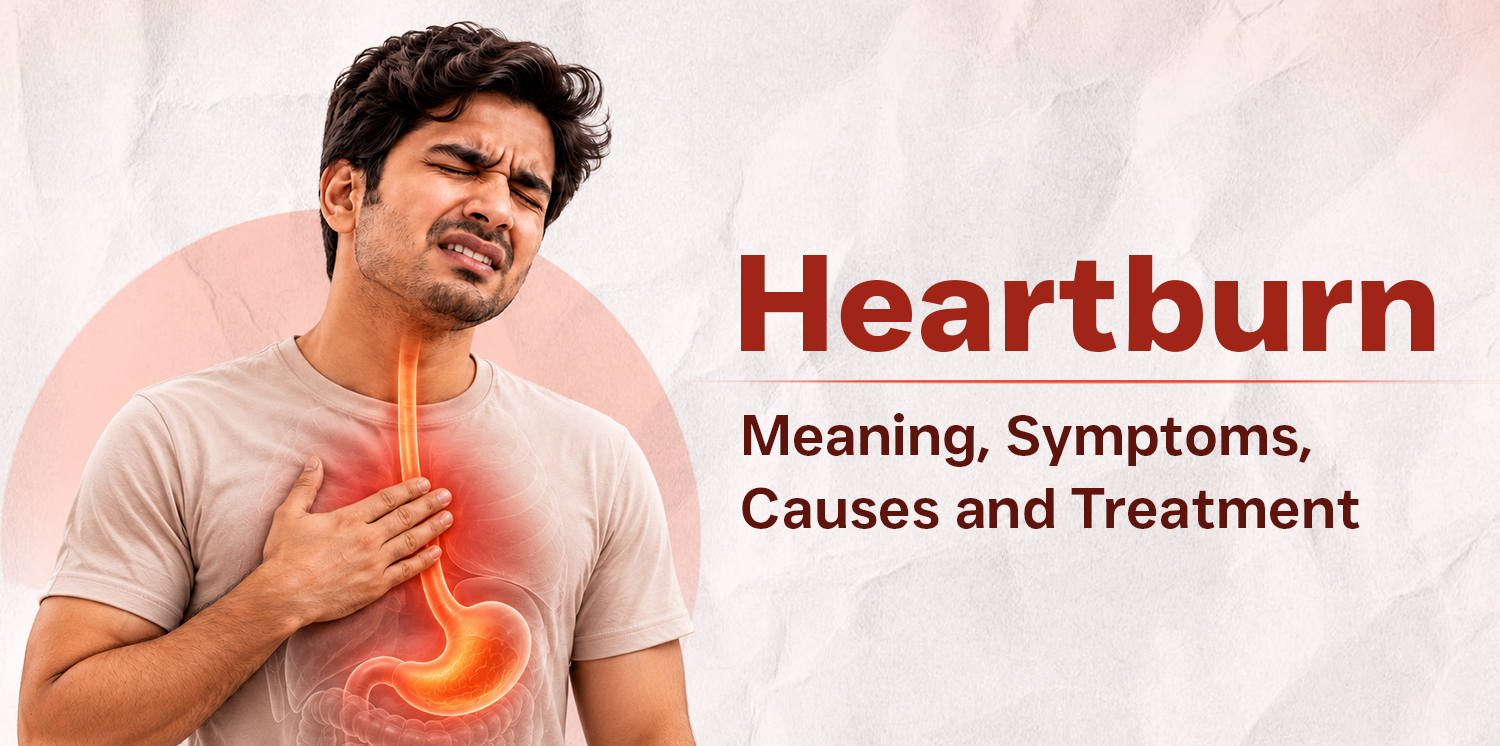
A burning feeling climbs behind your breastbone after dinner, and a sour taste follows in your throat. Many people call this acidity, and many reach for Eno or a Digene tablet. Doctors call it heartburn, and it is one of the most common digestive complaints. Occasional episodes are usually harmless, but frequent ones deserve a closer look. This guide explains what heartburn means, how it feels, what triggers it, how to tell it from a heart problem, and how doctors treat it. If your symptoms keep returning, a gastroenterology doctor in Navi Mumbai can help you find the cause.
What Is Heartburn? Meaning and Definition
Heartburn is a burning pain or discomfort in the middle of the chest, behind the breastbone, that often rises toward the throat. It happens when stomach acid flows back into the food pipe (oesophagus). Despite the name, it has nothing to do with the heart.
The ‘heartburn’ definition is straightforward, really: it’s a symptom, not a disease. It’s usually indicative of acid reflux (stomach contents coming back up). If it’s a frequent occurrence, then it’s termed gastro-oesophageal reflux disease (GERD).
How Heartburn Happens
A ring of muscle at the bottom of the food pipe (the lower oesophageal sphincter) acts as a one way valve. It opens to allow food into the stomach and then closes. If it relaxes at the wrong time or is simply weak, then acid can reflux. The lining of the food pipe has no thick protective layer like the stomach, so the acid will burn.
Pressure on the stomach (from a large meal, excess weight, or pregnancy) pushes more acid against the valve. Lying down removes the benefit of gravity, so reflux is often worse after meals and at night.
Heartburn Symptoms
Heartburn symptoms are a burning pain behind the breastbone, a sour or bitter taste in the mouth, and the sensation that food is coming back up. The pain usually starts after eating, when you’re bending forwards or lying down. It can be a few minutes or can go on for several hours and is usually relieved by antacids (though only briefly).
- Burning behind the breastbone: acid irritates the lining of the oesophagus.
- Sour or bitter taste: small amounts of stomach contents will reach the back of the throat (regurgitation).
- Burping and a bloated feeling: swallowed air and the stomach not emptying properly leads to a build up of pressure.
- Hoarse voice or throat clearing in the morning (acid has touched the voice box overnight).
- Dry cough: acid irritates the throat (particularly when you’re lying down).
- Difficulty swallowing: repeated acid damage can lead to the food pipe becoming narrowed or inflamed so this would need looking at.
What Heartburn Feels Like
Most people describe it as a warm, burning line which goes from the upper belly up into the chest or throat. It’s a central chest pain rather than one to one side. It tends to get worse when you bend, when you stoop to tie your shoes, when you’re lying on your back and it usually gets better when you’re sitting up.
Ordinary acidity (gas, a heavy stomach) falls into this category but the two are quite different. Acidity typically presents as a sense of heaviness or sour burps in the upper abdomen. Heartburn on the other hand burns further up, behind the breastbone.
How long does heartburn last?
A typical episode will last from a few minutes up to about two hours and may come back again after the next meal or when you’ve gone to bed. If the burning is going on for longer than a few hours or is coming back on most days then it’s reflux that needs to be looked at by a doctor.
Heartburn at Night
Night time reflux is very common as lying down allows the acid to reflux more easily. It’s a common occurrence with people waking up at 1 or 2 in the morning (usually quite soon after a heavy late dinner). The three things you can do are: finish your dinner 2-3 hours before going to bed, raise the head of the bed by about 6 inches using blocks under the bedposts and sleep on your left side.
Heartburn that keeps coming back, or wakes you at night? Speak with a gastroenterologist at Kokilaben Dhirubhai Ambani Hospital for a proper diagnosis. Taking antacids on your own for weeks can hide the cause.
Heartburn causes: what triggers it?
What causes heartburn? A weak or relaxed valve at the bottom of the oesophagus (food pipe) allows stomach acid to move up. All sorts of things can increase the likelihood of this including what you eat, your eating habits, being overweight, being pregnant, smoking and certain medications. The causes of heartburn are different in different people so it’s worth tracking your own triggers.
Food and Drink Triggers
Some foods will relax the valve or increase the acid and they’ll vary from person to person.
- Spicy and fried foods: these irritate the food pipe and slow down digestion so the food stays in the stomach longer.
- Fatty meals (e.g. buttery gravies, rich sweets): fat relaxes the valve and delays emptying.
- Citrus fruits and tomatoes: their acid will directly irritate an already inflamed oesophagus.
- Chocolate: it relaxes the valve.
- Caffeine (e.g. strong chai or coffee) can have the effect of relaxing the valve in some people.
- Alcohol and fizzy drinks: they relax the valve and distend the stomach.
Notice which ones trigger your symptoms and eliminate those first. A nutritionist in Navi Mumbai can help you build a meal plan around your own triggers.
Eating Habits
Large meals stretch the stomach and push the acid up. Having dinner at 10 or 11 pm and then going straight to bed provides the acid with a perfect route. Lying down within two hours of a meal has the same effect. Long gaps and then a very large meal (e.g. breaking your fast and then having a huge meal) can also lead to heartburn.
Body and Medical Causes
- Weak valve: the muscular ring simply loosens with age or for no obvious reason.
- Hiatal hernia: part of the stomach slides up through the diaphragm and weakens the valve.
- Extra weight (belly fat) pushes on the stomach and forces the acid up.
- Pregnancy: the hormones loosen the valve, and the womb, as it grows, is pressing on the stomach so lots of pregnant women get heartburn, particularly in the later months.
- Smoking: relaxes the valve and reduces saliva (which normally acts to calm the acid).
Medicines That Can Trigger Heartburn
Some painkillers (aspirin and ibuprofen, for example) can irritate the gut and oesophagus. Some of the blood pressure meds and some other drugs can relax the valve. If you think any particular medication is causing it, then don’t stop it cold turkey. Always ask your doctor first, as they may be able to reduce the dose or offer you an alternative.
Myth vs Fact
Myth: Spicy food causes heartburn.
Fact: Spicy food can provoke it, but the real problem is a weak valve, which allows the acid to rise. Simply cutting down the spice won’t usually cure it.
Heartburn or Heart Attack? How to Tell the Difference
Heartburn typically causes a burning sensation after eating, which is relieved by sitting upright or the use of antacids. A heart attack is more likely to cause pressure, tightness, or a squeezing sensation in the chest, often accompanied by breathlessness, sweating, and/or pain radiating to the arm or jaw. They can be very similar in their presentation, so doctors will never rely on the symptoms alone.
Comparison Table
| Heartburn | Heart attack | |
|---|---|---|
| Feel | Burning, warm, sour taste | Pressure, squeezing, heaviness |
| Timing | After meals, when bending or lying down | During effort or at rest, no link to meals |
| Relief | Eases with antacids or sitting up | Does not ease with antacids |
| Spread | Rises toward the throat | May spread to arm, jaw, neck or back |
| Other signs | Burping, sour taste | Sweating, breathlessness, nausea, light headedness |
When to Treat Chest Pain as an Emergency
Treat chest pain as an emergency if it’s the sort of pressure or squeezing that you get, if it lasts more than a few minutes, if it’s accompanied by breathlessness, sweating, nausea, pain in the arm/jaw/back, etc. Don’t wait and see if an antacid helps. Call an ambulance or go straight to a chest pain treatment hospital with 24/7 emergency care.
Why You Should Never Guess
Chest burning and heart pain can be indistinguishable to the untrained eye. If you’re over 40, have diabetes, hypertension, hyperlipidaemia, or a family history of heart disease, and you’re now experiencing some new chest discomfort, then get it checked. An ECG is quick and gives you a clear answer.
Heartburn Remedies
A heartburn remedy will only work if it addresses the root cause. You should sit upright, wait before lying down, eat smaller meals and avoid your own particular triggers. An antacid such as Digene or Eno will of course provide relief from occasional heartburn. If you find yourself needing antacids more than twice a week, then you should see a doctor.
- Sit or stand upright after meals (gravity keeps the acid down in the stomach).
- Eat smaller meals more often: a smaller meal puts less strain on the valve.
- Finish dinner 2 to 3 hours before bed. The stomach is empty before you go to bed.
- Sip some water or have a glass of chaas (which will also wash the acid down and soothe the throat for a bit).
- Loosen any tight clothes and belts (tight waistbands in particular push on the stomach).
- Lose some extra weight (even a small amount of weight will reduce the pressure on the stomach).
- Stop smoking and limit alcohol as both of these will weaken the valve.
- Use antacids sparingly. They will neutralise the acid for a short time, but they don’t address the root of the problem.
- Home remedies (jeera water, saunf, cold milk etc.) will help some people for a short period of time. Cold milk may actually bring on a rebound of acid, and no home remedy will treat reflux that keeps coming back.
How is heartburn diagnosed and treated?
Doctors will diagnose it on the basis of your symptoms and history and may suggest tests if the symptoms are frequent, severe or unusual. Treatment begins with lifestyle modifications and the use of medication to reduce acid. If the symptoms persist or if any of the warning signs develop then the doctor will investigate further by looking inside the oesophagus and stomach with an endoscope.
How Doctors Diagnose Heartburn
- History and examination: Your doctor will ask you when the burning starts, what you eat and what medicines you take.
- Upper GI endoscopy: A thin tube with a camera is passed down the mouth to look at the oesophagus and stomach. It can show inflammation, ulcers, or a hiatal hernia, and if required, biopsies can be taken.
- Urea breath test: this looks at the presence of H. pylori (a bacterium in the stomach which can cause ulcers and gastritis).
- Acid monitoring (pH testing) is a small sensor which measures how often acid gets into the food pipe over a 24 hour period.
- ECG: the heart is usually the first organ that is looked at if the chest pain could be cardiac in origin.
How Doctors Treat Heartburn
Heartburn treatment is going to be dictated by how frequently the symptoms occur and what the tests show.
- Antacids: they neutralise the acid for a short period of time, which is fine if you only have occasional heartburn.
- H2 blockers (e.g. famotidine): these reduce acid production for several hours.
- Proton pump inhibitors (PPIs) like pantoprazole: they reduce acid more effectively and will help the oesophagus to heal. Taking PPI combinations such as Pan-D for months on their own can mask problems and is potentially dangerous.
- Treating the cause: H. pylori infection is treated with a course of antibiotics, and a hiatal hernia or weight is managed as appropriate.
- Surgery (e.g. fundoplication) is only considered by the doctors when the medication fails, or complications arise. The vast majority of people will never require it.
Untreated reflux can go on to inflame or even narrow the oesophagus over time, so persistent symptoms are definitely something that should be treated.
When to See a Doctor
If the symptoms are occurring more than twice a week, persisting for more than two weeks despite the use of antacids, or if they’re waking you at night, then see a doctor. See a doctor immediately if you have any difficulty swallowing, are vomiting, have black stools, are experiencing unexplained weight loss, or have a sensation that food is sticking in your chest.
Which Doctor to See
Start with a GP or a gastro (gastroenterologist) if it’s just a case of pressure in the chest. Get a heart check first if it’s at all reminiscent of chest pain.
Heartburn Care at Kokilaben Dhirubhai Ambani Hospital, Mumbai
At Kokilaben Dhirubhai Ambani Hospital in Mumbai, the Centre for Gastroenterology and Hepatology looks after heartburn and reflux. They offer High Definition Narrow Band Imaging (NBI) endoscopy and urea breath testing. Under the Full Time Specialist System (FTSS), the specialists look after the patient together. The hospital is JCI, NABH and CAP accredited and has 24/7 emergency care. Specialists, their qualifications and details of their consultations can all be viewed in the KDAH doctor directory.
Conclusion
Heartburn is very common, and the majority of cases will be dealt with simply by making changes to your diet, the timing of your meals and your general habits. However, if your symptoms persist, recur week after week, wake you at night, or are accompanied by any warning signs, you should have them properly assessed. Any chest pain that is a sensation of pressure absolutely requires urgent attention. If your symptoms are the ones that just keep coming back, then book an assessment.
Frequently Asked Questions
1. What helps heartburn?
Sit up, loosen any tight clothes, and don’t lie down for 2-3 hours after a meal. An antacid will help with an occasional episode. For frequent symptoms, smaller meals, an earlier dinner, weight loss, and a doctor reviewing your medications are all likely to be more effective than simply taking antacids over and over again.
2. What can cause severe heartburn?
Large or fatty meals, alcohol, smoking, a hiatal hernia, pregnancy, excess weight and certain medications can all lead to severe episodes. Chest pain which is described as pressure or which is associated with sweating and/or breathlessness is not heartburn until a doctor has ruled out the heart.
3. Will drinking water help with heartburn?
A few sips of water will wash the acid out of the food pipe and give you temporary relief. A large quantity all at once will stretch the stomach and can actually make reflux worse. Water doesn’t treat the underlying cause so you can still have frequent episodes and it will still be necessary to have it checked.
4. How long will heartburn last?
An episode will normally pass within minutes to a couple of hours. If the burning is going on for several hours or is returning most days then it does need a doctor’s review. If the burning never quite goes away and/or is associated with difficulty swallowing then it should be looked at by a doctor sooner.
5. When to be concerned about heartburn?
Worry if you’re having difficulty swallowing, repeated vomiting, black stools, weight loss or burning more than twice a week. Chest pressure, sweating, breathlessness or pain radiating to the arm or jaw should be treated as an emergency.
6. Are heartburn, acid reflux and GERD the same?
No. Acid reflux is the backward flow of stomach acid. Heartburn is the burning feeling it causes. GERD is the long term condition in which reflux happens often or causes damage. Many people say acidity or gas for all three.
7. Do home remedies for heartburn work?
Some help briefly, such as sitting upright, sipping water or having chaas. They calm symptoms but do not fix a weak valve. If you need a home remedy on most days, see a doctor instead of adding more remedies.