
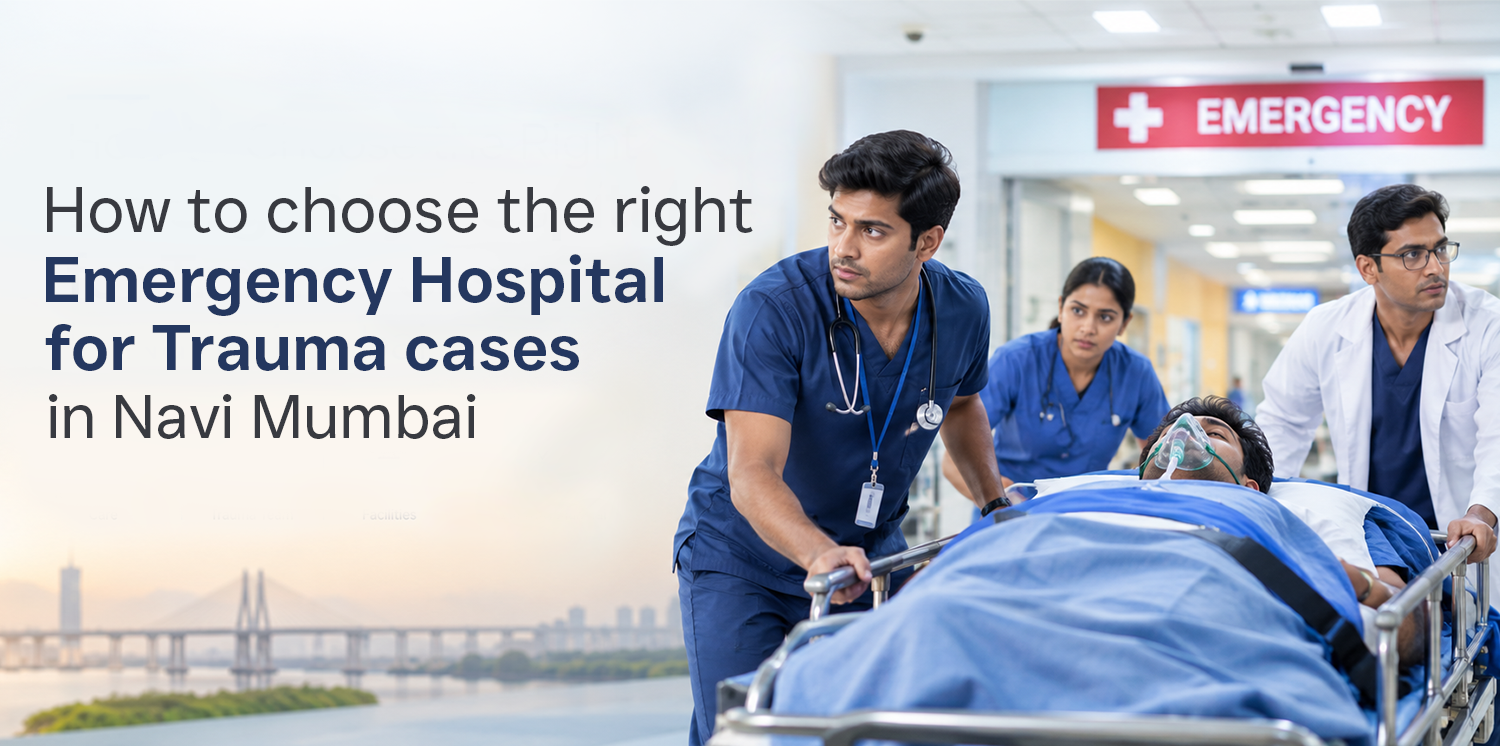
A simple road accident, a fall from a height, or an injury at work can turn what is normally a regular day into an emergency within a matter of seconds. At that moment, the hospital you get to determines how quickly doctors will be able to stop the bleeding, protect the brain, and stabilise your breathing. Choosing an appropriate trauma hospital in advance can save valuable time when every minute matters.

As Navi Mumbai has busy motorways, industrial areas, and rapidly developing neighbourhoods, injuries occur more frequently than most families anticipate. This guide outlines what trauma care entails, what a good hospital provides, how to assess the medical staff and the facilities, and what action to take when an emergency arises. Read this information carefully, share it with your family, and save the name and telephone number of your chosen emergency trauma hospital in your phone.
What Is Trauma Care?
What counts as emergency trauma care? It is the provision of immediate treatment for serious injuries resulting from accidents, falls, burns, attacks, or sudden impact. The doctors act by first trying to save a patient’s life, then securing the limbs and organs, and finally beginning the process of recovery.
Trauma is different from a common emergency like a fever or stomach pain since trauma patients frequently have more than one injury, for example, a head injury together with a broken leg and internal bleeding. In such cases, emergency physicians, surgeons, nurses, and imaging teams have to work together within minutes. That is why a special emergency hospital for trauma designs its entire system to achieve this speed.
Trauma cases are divided by the doctors into those that are minor, moderate, and severe. Severe trauma involves heavy bleeding, difficulty in breathing, injuries to the head or spine, and serious fractures. Such cases require an advanced trauma centre and hospital, not a small clinic.
What Should a Trauma Hospital in Navi Mumbai Have?
An excellent emergency hospital for trauma has all the things a severely injured person might need available within the same building. Look for the following essentials:
- A 24-hour emergency department: Doctors should treat injuries daily, at every hour, including nights and holidays.
- A trauma bay: This dedicated area holds ventilators, monitors, and resuscitation equipment ready for immediate use.
- On-site imaging: CT scans, ultrasound, and digital X-rays should be available around the clock so scans can be performed promptly.
- Emergency operating theatres: Surgeons should be able to start surgery without waiting for a theatre to become available.
- A blood bank: Severe injuries often require blood quickly, and delays can be dangerous.
- An intensive care unit (ICU): Nurses and doctors should be experienced in caring for seriously injured patients.
- Specialists on call: Neurosurgeons, general surgeons, and vascular surgeons should be able to attend to patients quickly. High-quality orthopaedic trauma care is essential, as fractures and joint injuries account for a significant proportion of accident-related cases.
- Trained ambulance service: Paramedics should begin treatment before the patient reaches the hospital.
An advanced trauma centre should provide these essential services on-site. Referring patients elsewhere for scans or blood tests can cause significant delays in diagnosis and treatment.
How to Evaluate the Emergency and Trauma Team
Equipment is important, but people save lives. Consider the following factors when evaluating the hospital’s trauma team.
- Experienced trauma team: Confirm that trauma surgeons and emergency physicians are available on-site at all times.
- Rapid treatment: An on-site team can begin care without delay.
- Advanced training: Check whether doctors have Advanced Trauma Life Support (ATLS) training to ensure a structured approach to serious injuries.
- Skilled nurses and paramedics: Experienced staff can identify early changes in a patient’s condition and respond promptly.
- Regular emergency drills: Ask whether the hospital conducts drills to help the team work efficiently under pressure.
- Clear communication: The team should explain the situation to the family in simple language.
- Family updates: A reliable Accident and Emergency care team in Navi Mumbai should assign a doctor to keep relatives informed throughout treatment.
Finally, find out how quickly a specialist can see a patient after arrival. Hospitals providing trauma emergency services should be able to explain their specialist availability and emergency response procedures.
What Emergency Facilities Should You Consider?
Beyond the trauma bay, look at how easily you can reach and use the hospital.
Location and Access
Choose a trauma hospital close to your home, workplace, or the highways you use most. A hospital ten minutes away may serve you better than a famous one an hour away, depending on the severity of the injury and the care required.
Dedicated Ambulance Entrance
Ask whether the hospital has a separate emergency entrance that allows ambulances to reach the treatment area directly without passing through the main lobby.
Current Bed Availability
Find out whether the hospital has emergency and ICU beds available when needed. If the unit is full, the patient may require transfer to another facility, potentially delaying treatment.
Specialist Availability
Head and spine injuries require prompt care from experienced specialists. Check whether neurosurgeons and neurologists are available around the clock and whether the hospital has dedicated neurological emergency care. Delays in treatment can affect a patient’s recovery.
Insurance and Payment Support
An emergency help desk that handles insurance approval and cashless claims can reduce your family’s stress during a difficult time.
Recovery Services
In the case of trauma patients, physiotherapy and rehabilitation are often required. A hospital that offers these services can help patients regain mobility and return to their daily activities.
Visit the emergency department or contact the hospital in advance. Ask relevant questions and observe how the staff respond. This brief interaction can provide valuable insight into the hospital’s suitability for trauma care.
What to Do During a Trauma Emergency
Stay calm and act in the following order:
- Call for help: Dial 112 for emergency assistance in India or 108 for ambulance services where available. Tell the operator your location, the type of accident, and how many people need help.
- Keep the person still: Do not move someone with a suspected neck, back, or head injury unless fire or another immediate danger threatens them.
- Control bleeding: Apply firm, direct pressure to the wound with a clean cloth or dressing. If an object is embedded in the wound, do not remove it.
- Avoid giving food or water: The person may need surgery, and eating or drinking could complicate emergency treatment.
- Keep the person warm and monitor breathing: Cover them with a blanket and watch for changes in consciousness or breathing.
- Carry key documents if possible: Bring identification, insurance details, and a list of regular medicines if doing so does not delay emergency care.
Tell the ambulance crew what happened and share any known details about the patient’s injuries. Follow their advice about the appropriate destination. The nearest suitable emergency department can provide initial stabilisation and arrange a transfer if more specialised trauma care is required.
Frequently Asked Questions (FAQs)
What Injuries Require Immediate Emergency Treatment?
Heavy bleeding, head injuries causing confusion or fainting, possible neck or spine injuries, chest injuries that make breathing difficult, severe burns, deep cuts, and fractures with exposed bone all require immediate medical attention.
Should I Go Directly to a Trauma Hospital After an Accident?
Yes, if the injury appears serious and a suitable trauma hospital is accessible. If the patient is bleeding heavily or struggling to breathe and the trauma hospital is far away, the nearest emergency department may be able to stabilise the patient first and arrange a transfer if necessary. Follow the ambulance team’s guidance.
What Happens When a Trauma Patient Reaches the Emergency Department?
A medical team checks the patient’s airway, breathing, and circulation as a priority. Doctors then arrange scans and tests when appropriate, control bleeding, and begin treatment. Depending on the injuries, the patient may go to surgery, the ICU, or a ward. The team should keep the family informed as the situation allows.
How Are Head Injuries Assessed After an Accident?
Doctors assess the patient’s alertness, eye movements, speech, and ability to move normally. A CT scan may be used to detect bleeding or swelling inside the skull. Vomiting, drowsiness, confusion, seizures, or worsening symptoms after a head injury require urgent medical assessment.
Conclusion
Choosing an emergency hospital for trauma cases in Navi Mumbai before an accident occurs can help families make quicker decisions when time matters. Look for a hospital with a 24-hour emergency department, trained trauma specialists, on-site imaging, emergency operating theatres, blood bank access, and intensive care facilities.
The hospital’s location, ambulance access, specialist availability, and rehabilitation services are also important considerations. Save the emergency contact number of a suitable hospital and discuss your emergency plan with your family. Being prepared can help you respond more calmly and seek the right care when an emergency occurs.