
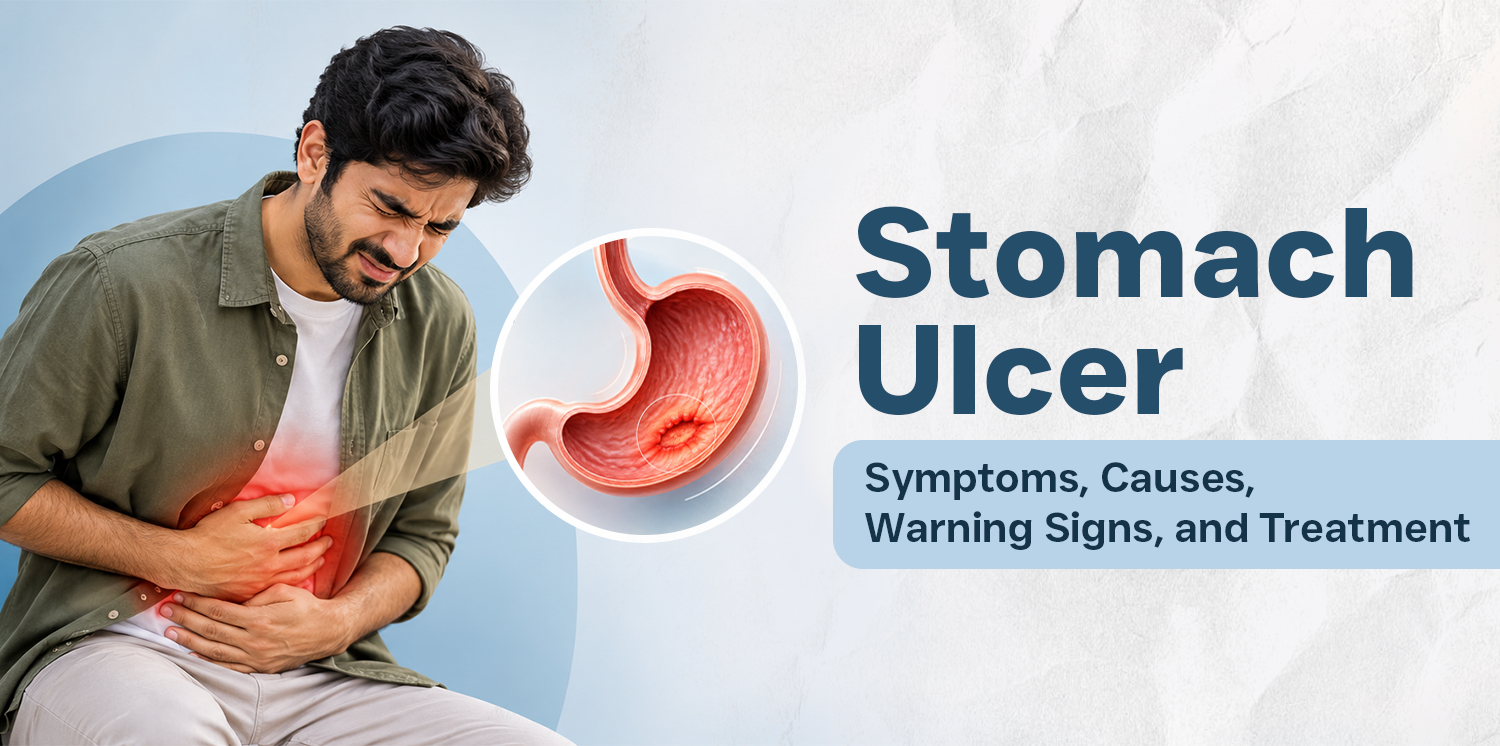
A dull ache below your ribs will wake you at night, and it’ll subside for a bit after you’ve eaten. A lot of people just chalk it up to acidity, reach for the Eno or the Digene and wait. It may well just be that. It may well be a stomach ulcer (a sore in the lining of the stomach) which will require treatment to heal. Most stomach ulcers have an identifiable cause and will respond to treatment once they’ve been diagnosed. This guide looks at what a stomach ulcer is, how the symptoms differ in women and men, the red flags, the causes, the diagnosis, the treatment, and the diet. If you’re still having that burning pain on a regular basis, then a visit to a gastroenterology hospital in Navi Mumbai is the way to go to find out why.
What is a stomach ulcer?
A stomach ulcer (gastric ulcer) is simply an open sore on the inner lining of the stomach (gastric mucosa). It occurs when the stomach’s protective mucus layer is eroded, and the acid then attacks the underlying tissue. The vast majority of stomach ulcers are due to H. pylori infection or the regular use of painkillers. They are treatable by doctors.
Your stomach produces very strong hydrochloric acid and the digestive enzyme pepsin to break down food. The same acid would digest the stomach wall if it wasn’t for a thick layer of mucus and bicarbonate, which acts as a sort of raincoat. An ulcer is essentially the result of that protective layer thinning and the acid getting to the sensitive underlying tissue.
Doctors use the broad term peptic ulcer disease (PUD) to describe ulcers which are due to acid and pepsin. They then categorise these according to where the ulcer is located:
- Stomach ulcer (gastric ulcer): the sore forms in the stomach lining.
- Duodenal ulcer: the sore forms in the upper small intestine (the duodenum) just after the stomach.
- Esophageal ulcer: the sore forms in the lower part of the oesophagus (food pipe), generally following a long-standing case of acid reflux.
Signs and Symptoms of a Stomach Ulcer
The classic symptom of a stomach ulcer is a burning or gnawing pain in the upper abdomen, just below the breastbone. Other symptoms may be bloating, nausea, a feeling of fullness after eating very little, and burping. The pain is often in episodes and can wake you in the night. Black stools or vomiting blood are signs of bleeding and require urgent attention.
- Burning or gnawing pain in the upper abdomen: acid has touched the raw sore.
- Bloating and early satiety: the sore and the swelling will slow gastric emptying.
- Nausea: irritation of the gastric mucosa leads to stimulation of the vomiting centre in the brain.
- Tiredness and pale skin: slow bleeding from the sore can lead to anaemia (low hemoglobin).
What does stomach ulcer pain feel like?
Stomach ulcer pain is a gnawing, burning or biting pain (sometimes quite like an intense hunger pain which won’t go away). It’s a pain in the upper middle of the belly, just below the ribcage and the breastbone. It can occasionally be felt in the back, which occurs when an ulcer on the back wall of the stomach is sitting right up against the pancreas.
Timing is a clue. Ulcer pain typically comes up late at night (roughly between 11pm and 2am) as the stomach produces more acid at night with nothing to absorb it. Food may relieve it for a short time, then it comes back.
The table below shows the difference between ulcer pain and acidity.
| Feel | Gnawing, burning, hunger-like ache | Sour burps, heaviness, mild burning |
|---|---|---|
| Timing | Comes in spells, often wakes you at night | Follows a heavy or spicy meal |
| Duration | Returns for weeks, even months | Settles within hours |
| Relief | Eases briefly with food or antacid, then returns | Settles with an antacid or a walk |
| Other signs | Weight loss, black stools, anemia | Usually none |
Stomach Ulcer Symptoms in Females
Women very frequently confuse the symptoms of an ulcer (bloating, upper belly cramps) with gallstones, indigestion, or premenstrual stomach upset and so the ulcer goes completely unattended. Heavy periods can also lead to iron deficiency and the slow bleeding from an ulcer will add to that. The more subtle signs are:
- Pale skin and hair fall: due to low iron from slow, insidious blood loss.
- Dizziness and breathlessness on climbing stairs: less oxygen getting to the body as haemoglobin falls.
Stomach Ulcer Symptoms in Males
Lots of clinic studies have shown that stomach ulcers are more common in men (partly as a result of their use of tobacco and alcohol). Smoking and chewing tobacco all irritate the gastric mucosa, retard healing and exacerbate the pain. Alcohol also irritates the mucosa and can in fact mask the severity of the pain.
Men frequently miss the early signs of a stomach ulcer and will often put it off for a long time. Many will take antacids for weeks before the pain becomes severe or they see black stools, and then they’re forced to go.
Red Flag Symptoms That Need Hospital Care
The majority of ulcers will heal with treatment, but there are a number of signs that would indicate a complication. If you have any of the following you should see a doctor the same day:
- Black, sticky, tar-like stools (melena): stools which have digested blood coming from higher down the gut.
- Vomiting bright red blood or dark particles (like coffee grounds), i.e. hematemesis: stomach acid turns the fresh blood into dark grains.
- Sudden severe abdominal pain with a board-like abdomen (ulcer has perforated the stomach wall): requires emergency treatment (sometimes with Surgical Gastroenterology in Navi Mumbai).
- Repeated vomiting of food which had been eaten hours or indeed days previously, with weight loss: a swollen ulcer can lead to obstruction of the gastric outlet (gastric outlet obstruction).
- Fainting, cold sweats, a fast pulse or dizziness on standing: all signs of blood loss leading to low blood pressure.
Persistent burning in the stomach? Don’t just go on self-medicating. See a gastroenterologist at Navi Mumbai for a proper diagnosis.
Causes and Risk Factors: What is the reason for a stomach ulcer?
The vast majority of stomach ulcers are due to one of two things: infection with the bacterium H. pylori or the regular use of NSAIDs (non-steroidal anti-inflammatory drugs). Both of these factors erode the stomach’s protective mucus layer allowing acid to get to the lining. Smoking, alcohol and irregular eating all increase the risk, and there are a number of rarer conditions which can also lead to ulceration.
Myth vs Fact
Myth: stress and spicy food cause ulcers.
Fact: Neither one in themselves causes an ulcer. H. pylori and NSAIDs do. Stress and spice will irritate an ulcer that’s already there and make the pain worse.
Primary Causes of Stomach Ulcers
1. Helicobacter pylori (H. pylori) Bacterial Infection
H. pylori is a spiral-shaped bacterium that lives in the stomach lining. It’s transmitted via contaminated food and water or through close contact (so quite commonly in childhood). It attacks the mucus layer and causes inflammation of the lining. A large number of people will carry it without any symptoms at all and only a proportion will go on to develop ulcers. There are published studies on H. pylori on PubMed.
2. Regular Use of NSAID Painkillers and Low Dose Aspirin
Painkillers such as ibuprofen, diclofenac and aspirin work by blocking the chemicals which keep the stomach lining thick and well blooded. If you take them frequently or on an empty stomach you increase your risk. Don’t stop a prescribed aspirin of your own accord. Speak to your doctor first as they may be in a position to prescribe something to protect your stomach.
3. Rare Clinical Causes
Zollinger-Ellison syndrome is a rare condition in which a small tumour produces excessive acid. Stress ulcers (so-called physiological stress ulcers) can occur in the critically ill, following major surgery or in the case of serious burns as a result of reduced blood flow to the stomach.
Lifestyle and Indian Dietary Factors That Aggravate Ulcers
- Tobacco and smoking: nicotine constricts the blood vessels in the stomach wall, impairs healing and increases the likelihood of the ulcer coming back.
- Alcohol: irritates and erodes the mucus layer, leading to erythema and erosion of the mucosa.
- Long gaps between meals: acid builds up on an empty stomach (as it does with long working hours or with religious fasts followed by a heavy fried meal).
- Strong tea or coffee on an empty stomach: both increase the acid and can irritate an ulcer.
- Heavy red chilli and garam masala: will sting an ulcer crater that’s already exposed, even if they don’t cause the ulcer.
How are stomach ulcers diagnosed?
Doctors will diagnose a stomach ulcer with an upper GI endoscopy (a camera test which looks directly at the stomach lining). Tests for H. pylori (the main cause) are available in the form of a breath, stool or blood test. A full blood count will look for anaemia due to slow bleeding.
Upper Gastrointestinal Endoscopy
In an upper GI endoscopy you have a thin flexible tube with a camera passed down your throat through your mouth into your stomach (you get the throat numbing spray and/or sedation). The doctor will take a number of biopsies. A biopsy of a stomach ulcer is important in that it will confirm H. pylori and rule out cancer.
Non-Invasive Tests for H. pylori and Supporting Blood Work
- Urea breath test: you swallow a harmless liquid and a breath sample tells you whether H. pylori is present.
- Stool antigen test: looks for H. pylori protein in a stool sample.
- Blood antibody test: shows only past contact.
Your doctor may ask you to stop your acid-reducing medication or antibiotics for a short period prior to a breath or stool test. Don’t stop any of your medication without first asking your doctor.
How to Treat Stomach Ulcers: Medications, Endoscopy, and Surgery
Stomach ulcer treatment has three aims: reduce the acid (so the sore can heal), remove the cause and deal with any complication. Most ulcers will heal with medication. Endoscopy is used to stop the bleeding, surgery is only required in the case of a complication or an ulcer that’s not responding.
- Acid-reducing medication (proton pump inhibitors such as pantoprazole): reduces the acid so that the ulcer can heal (over several weeks).
- H. pylori treatment involves: a course of antibiotics with an acid-reducing medicine (usually for about two weeks). You must complete the full course or the bacteria will survive.
- Stopping the trigger: if the painkillers were the cause of the ulcer then your doctor will either change or stop them and may also add a stomach-protecting medicine.
- Follow-up testing: a repeat test confirms that H. pylori has cleared.
- Endoscopic treatment: if an ulcer is bleeding then the vessel can be closed off via the endoscope using clips, heat or injection.
- Surgery is considered in the case of: a perforation, bleeding that endoscopy is unable to stop or a blocked gastric outlet. Surgeons with surgical gastroenterology training in Navi Mumbai will either repair or resect the affected area.
Can stomach ulcers be cured?
Yes, the majority of stomach ulcers will heal with treatment and will then tend to stay away once the H. pylori has cleared and the painkillers have stopped. That said, the doctors can’t guarantee that this will be the case for every individual and they can certainly return if the underlying cause is still present. Gastric ulcers also require a follow-up to confirm that they have healed.
Diet and Prevention: What to Eat and Avoid with a Stomach Ulcer
Food doesn’t cause a stomach ulcer but can either help or hinder the healing of the ulcer. You should go for soft, simple, home-cooked meals in small amounts and avoid any foods that will sting or raise the acid. A dietitian can put together a bland diet plan which will suit your lifestyle, your culture and any other health conditions you may have.
| Foods to Include | Foods to Avoid |
|---|---|
| Homemade curd and buttermilk (chaas) | Green and red chillies, garam masala |
| Moong dal khichdi, soft cooked rice | Pickles (achaar) |
| Oatmeal | Deep fried samosas and pakoras |
| Steamed bottle gourd (lauki) and ridge gourd (turai) | Strong masala chai or black coffee on an empty stomach |
| Ripe banana and papaya | Fizzy drinks |
| Tender coconut water | Citrus juices |
Curd and chaas are gentle on the stomach and some studies do suggest that probiotics may be of help in conjunction with treatment (though they won’t replace the antibiotics).
Why cold milk is a trap. A lot of people will drink cold milk for their ulcer pain. It will quiet the pain for a bit, but the calcium and protein in the milk will actually provoke more acid later on and the pain will come back.
How to lower your risk:
- Drink safe water (boiled or RO water): this reduces the chance of H. pylori infection.
- Wash your hands before meals: this helps to limit the spread of bacteria.
- Don’t take any painkillers you haven’t been prescribed. Always ask your doctor before you start taking them regularly.
- Eat regular meals. Leaving long gaps has the effect of leaving the acid with nothing to work on.
Stomach Ulcer Diagnosis at Kokilaben Dhirubhai Ambani Hospital
If the burning pain in your upper belly is going on for more than two weeks, if it’s waking you up at night, or is associated with weight loss, vomiting or tiredness then you need to see a doctor. See a doctor immediately if you have black stools or are vomiting blood.
Kokilaben Dhirubhai Ambani Hospital has a Centre for Gastroenterology and Hepatology which treats peptic ulcer disease. The Centre offers High Definition Narrow Band Imaging (NBI) endoscopy and urea breath testing. Under the Full Time Specialist System (FTSS), the specialists will plan the care of the patient together. The hospital is JCI, NABH and CAP accredited and has 24-hour emergency care. Specialists, their qualifications and details of their consultations can all be viewed in the KDAH doctor directory.
Conclusion
A stomach ulcer is very common and very treatable. If the pain is recurrent, it’s waking you up at night or you’ve got black stools then you need to get it checked out properly rather than just popping another antacid. Book in for an assessment so that a specialist can identify the cause and get you on the correct treatment.
Frequently Asked Questions
1. How to relieve the pain of a stomach ulcer?
Take the medicines that your doctor prescribes, eat small regular meals and avoid chilli, strong tea and alcohol. An antacid may give you some temporary relief from the pain but it won’t heal the sore.
2. Can stomach ulcers heal on their own?
Some small ulcers will settle for a while but if H. pylori or the painkillers are still the cause they’re likely to come back. The treatment will heal the sore and eradicate the cause which in turn reduces the likelihood of it coming back.
3. How can I tell the difference between normal acidity and a stomach ulcer?
Acidity usually follows a heavy or spicy meal and settles within hours. Ulcer pain returns for weeks, often wakes you at night and may come with weight loss, black stools or tiredness.
4. Can stress or spicy Indian food cause a stomach ulcer on its own?
No. H. pylori infection and painkillers cause most ulcers. Stress, chilli and masala can irritate an existing ulcer and worsen pain, so ease up on them while you heal, but they are not the root cause.
5. Is an endoscopy always required to diagnose a stomach ulcer?
Not always. Breath, stool and blood tests can show H. pylori. Doctors usually recommend endoscopy when symptoms are severe, you are over 45 or 50, you have warning signs, or a stomach ulcer needs a biopsy to confirm healing and rule out cancer.
6. Can a stomach ulcer turn into stomach cancer if left untreated?
Most stomach ulcers do not turn into cancer. Long-standing H. pylori infection can raise the risk of stomach cancer over many years, and some stomach sores that look like ulcers are early cancers. This is why doctors biopsy stomach ulcers and ask for follow-up.